.png)

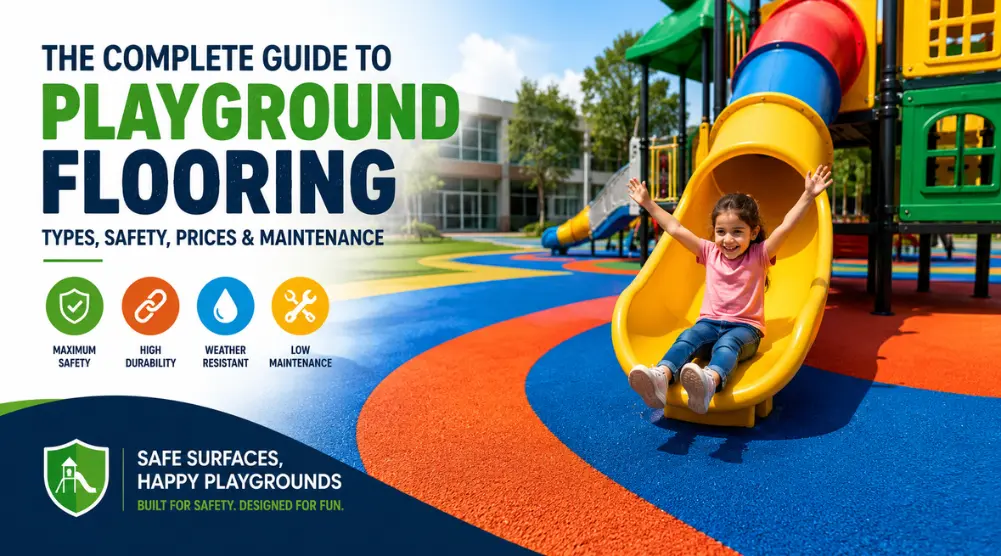
Rubber Playground Flooring in Saudi Arabia: Types, Prices, and Why It’s Essential for Your Child’s Safety
Children are meant to run, climb, jump, and occasionally fall. That’s a normal part of play. What isn’t normal is allowing a hard surface to turn an everyday fall into a preventable injury. The right playground safety surfacing absorbs impact, improves grip, and creates a safer space where children can play with greater confidence.
Among the many playground surfacing options available today, Rubber Playground Flooring in Saudi Arabia has become a preferred choice for schools, public parks, nurseries, residential communities, and commercial play areas across Saudi Arabia. Its shock-absorbing design, long service life, and ability to handle heavy daily use make it a practical solution for outdoor spaces exposed to the country’s demanding climate.
Choosing the right surface, however, isn’t as simple as picking the cheapest material. From EPDM rubber flooring and rubber safety tiles to poured-in-place systems, each option offers different levels of fall protection, maintenance requirements, appearance, and cost. Understanding these differences before investing can help you avoid expensive mistakes and build a play area that remains safe for years.
Why Rubber Playground Flooring Keeps Kids Safer in KSA
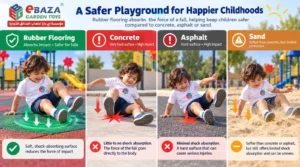
Rubber playground flooring is safer than concrete, asphalt, or sand because it absorbs the force of a fall instead of letting it hit the child’s body directly. It also improves grip, stays flat over time, and is tested against safety standards, which is why it’s the top choice for schools, parks, and daycare centers.
Here’s exactly how it protects kids:
It softens falls. If a child trips or jumps down, rubber flooring helps absorb the impact and reduces the force on their body.
It protects against head injuries. Falls from climbing frames and slides are what parents worry about most. Flooring that matches the height of the equipment gives real protection where it’s needed most the head.
It stops slips. Playgrounds get dusty and sometimes wet. Rubber flooring grips better than bare ground, so kids are less likely to slip while running or changing direction.
It stays flat and even. Sand and loose gravel shift over time and create trip hazards. These safety mats do not move once installed, and it’s also easier for strollers and wheelchairs to move across.
It’s tested, not just soft. Quality impact absorbing flooring is checked against recognized safety standards for impact protection so it’s proven to work, not just assumed to be safe.
Common Types of Rubber Playground Flooring in Saudi Arabia
Choosing the right playground surface starts with understanding the different types of flooring mats and rubber surfacing systems available. Each option is designed for specific environments, levels of foot traffic, and fall protection needs. Some are better suited for schools and public parks, while others work well for residential play areas or localized safety zones. Knowing how each type performs will help you select a flooring solution that balances safety, durability, and long-term value.
| Flooring Type | Best For | Main Advantage |
| Rubber Tiles | Kids schools & daycare centers | Easy to replace individual tiles |
| Poured-in-Place Rubber | Public parks & large playgrounds | Seamless, continuous surface |
| Interlocking Rubber Mats | Residential and modular play areas | Quick installation and easy expansion |
| Rubber Playground Mats | Swings, slides & high-impact zones | Cost-effective localized protection |
| Rubber Mulch | Natural-style playgrounds | Excellent drainage and cushioning |
| EPDM Rubber Flooring | Premium playground projects | UV-resistant colors and custom designs |
Rubber Tiles
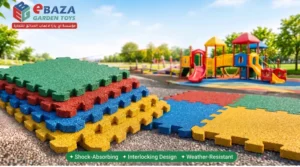
Rubber tiles are one of the most widely used playground floor mats in schools, nurseries, and community play areas. They are manufactured in different thicknesses to match various fall height requirements and are installed as individual modules. If a tile becomes damaged, it can be replaced without removing the entire surface, making maintenance simple and cost-effective.
Poured-in-Place Rubber Flooring
Poured-in-place rubber creates a smooth, seamless surface by combining rubber granules with a binding agent on-site. It offers consistent impact protection, is accessible for wheelchairs and strollers, and allows for custom colors and patterns. Its long service life makes it a popular choice for public parks, municipalities, and large commercial playgrounds.
Interlocking Rubber Mats
Interlocking rubber mats feature puzzle-style edges that connect securely without complex installation. They are ideal for modular playgrounds, residential compounds, and projects that may require future expansion. Their simple installation and easy removal also make them suitable for areas where flexibility is important.
Rubber Playground Mats
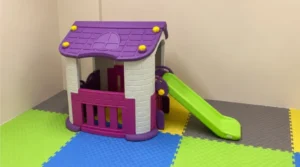
Rubber playground mats are commonly installed beneath swings, slides, climbing frames, and other high-impact areas where repeated landings occur. They provide additional fall protection exactly where it is needed and offer a practical solution for improving safety without resurfacing the entire playground.
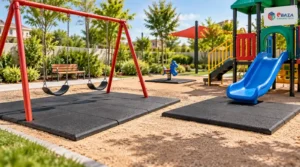
Rubber Mulch
Rubber mulch is made from recycled rubber and is designed to resemble traditional wood mulch while offering better shock absorption and drainage. It doesn’t decompose like natural mulch, but it can shift over time and may require occasional raking to maintain even coverage. It is often selected for playgrounds that prefer a more natural appearance.
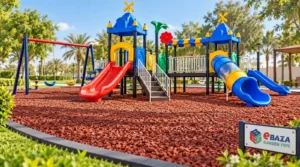
EPDM Rubber Flooring
EPDM (Ethylene Propylene Diene Monomer) rubber flooring is a premium playground surfacing option known for its durability and vibrant appearance. The colored EPDM granules resist UV exposure, helping the surface maintain its color even under strong sunlight. It also offers greater design flexibility, allowing custom graphics, patterns, and themed play areas without compromising long-term performance.
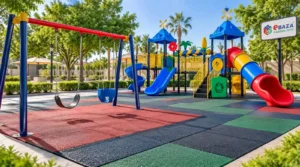
Which Playground Flooring Should You Choose?
The right flooring depends on what matters most for your project — budget, look, or long-term durability. Here’s a quick way to decide:
| If your top priority is | Choose | Why |
| Lowest upfront cost | Rubber Mulch | Cheapest option with good cushioning, needs occasional raking |
| Easy repairs later | Rubber Tiles | Damaged tiles can be swapped one at a time, no full resurfacing |
| A smooth, seamless look | Poured-in-Place Rubber | No seams or gaps, works well for wheelchairs and strollers |
| Fast installation | Interlocking Rubber Mats | Snaps together on-site, no curing time needed |
| Custom colors or designs | EPDM Rubber Flooring | Holds color longest under sun, allows patterns and graphics |
| Protecting one high-risk spot (swing, slide) | Rubber Playground Mats | Covers just the landing zone, cheaper than resurfacing everything |
How to Choose the Right Playground Safety Surface
The best playground flooring depends on four key factors: the age of the children, the equipment’s fall height, local weather conditions, and compliance with recognized safety standards. Considering these factors together helps create a play area that is safer, longer lasting, and better suited to its intended use.
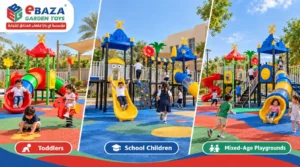
Choose Flooring Based on the Age of Children
Children of different ages interact with playground equipment in different ways, so the flooring should match the level of risk.
- Toddlers: Softer surfaces with appropriate cushioning are ideal for low-level play equipment and frequent falls.
- School-age children: Older children use climbing frames, monkey bars, and higher structures, often requiring thicker impact-absorbing surfaces.
- Mixed-age playgrounds: Where children of different age groups play together, choose a flooring system designed to protect the highest-risk play zones while providing consistent safety across the site.
How Thick Should Your Playground Flooring Be?
The taller the equipment, the thicker your flooring needs to be. This is called Critical Fall Height (CFH) the height a child could fall from while the surface still protects them.
As a general guide:
| Critical Fall Height (CFH) | Typical Thickness (Indicative) | Typical Use |
|---|---|---|
| Up to 1.0 m | 30 mm | Toddler areas, low equipment |
| Up to 1.5 m | 45-50 mm | Standard play structures |
| Up to 2.0 m | 60-70 mm | Taller slides, climbing frames |
| Up to 2.5 m | 80-90 mm | High climbing frames |
| Up to 3.0 m | 100-120 mm | Tallest equipment (maximum) |
Important: These thicknesses are general guidelines only. Actual protection depends on the tested performance of the specific product, including its material, density, and construction. Two products of the same thickness can perform differently. Always ask your supplier for the tested critical fall height (per EN 1177) for the exact product and thickness you are buying, and confirm that it meets or exceeds your equipment’s fall height.
Think About Saudi Arabia’s Climate
Outdoor playgrounds across Saudi Arabia are exposed to conditions that can shorten the lifespan of unsuitable materials.
When choosing a surface, consider whether it can withstand:
- High temperatures and prolonged heat
- Strong UV exposure without fading or cracking
- Dust and sand common in many regions
- Heavy daily use in schools, parks, and public spaces
- flooring should also allow water to drain rather than pool on the surface, especially after cleaning
A flooring system designed for these conditions will require less maintenance and deliver more consistent performance over time.
Check Compliance with Playground Safety Standards
Performance should always come before appearance. Before selecting a playground surface, confirm that it has been tested for impact protection and is suitable for the specific equipment installed above it.
In Saudi Arabia, the applicable references are GSO EN 1177 (impact-absorbing playground surfacing) and GSO EN 1176 (playground equipment safety), both adopted from the European EN standards. EN 1177 sets how impact attenuation is tested and links the result to a critical fall height. A test result only applies to the exact product, thickness, and construction that was tested.
Before approving any surface, ask your supplier for:
- The tested critical fall height for the exact product and thickness being quoted (not a generic brochure figure)
- Confirmation that the test result matches the equipment’s actual fall height, not just a general safety claim
- Written technical documentation, not a verbal assurance
Working with suppliers who can provide this documentation for the specific product you’re buying not just “tested to GSO EN 1177” as a general label gives real confidence in long-term safety, rather than a checkbox that sounds reassuring but doesn’t confirm anything about your actual installation.
Rubber Playground Flooring Prices: What Affects the Cost?
The overall investment in playground flooring depends on the needs of your project rather than a fixed price. Factors such as the type of surface, required thickness, installation method, and total coverage area all play a role in determining the final cost. In Saudi Arabia, prices typically start from around SAR 48–96/m², but the final cost varies based on your playground’s requirements and the level of safety needed.
What are the Factors That Affect Playground Flooring Prices?
- Material — rubber tiles range from SAR 48–96/m²; EPDM and poured-in-place cost more
- Thickness — thicker flooring for taller equipment raises the price per m²
- Installation — tiles install fast and cost less; poured-in-place needs more labor, so it costs more
- Size — bigger playgrounds need more material and labor, raising total cost
- Colors/design — standard colors cost less; custom patterns and graphics cost more
- Base condition — uneven ground needs extra prep, adding to installation cost
- Sourcing — imported material usually costs more than locally made options
Is Rubber Flooring Worth the Investment?
Although the initial cost is often higher than some traditional playground surfaces, rubber flooring offers better long-term value.
A quality safety surface can last for many years with minimal maintenance. It is less likely to require frequent repairs, performs well under heavy daily use, and helps reduce maintenance expenses over time. More importantly, it provides reliable impact protection, making it a worthwhile investment for schools, parks, residential communities, and commercial play areas where child safety is the top priority.
If you’re unsure which flooring system is right for your project or would like an accurate quotation, Ebaza Gardens can help. Our team can recommend a suitable playground surfacing solution based on your site, equipment, and budget, and provide a free consultation and quotation to help you make an informed decision before investing.
Mistakes to Avoid When Buying Playground Flooring
Getting playground flooring wrong is expensive to fix. Here are the most common mistakes buyers make and how to avoid them.
1. Buying without checking the product specification
Confirm the material, thickness, dimensions and intended use before placing an order. Products described as rubber flooring may be designed for different applications.
2. Ordering before measuring the site
Measure the total area and identify the zones beneath swings, slides and climbing equipment. Incorrect measurements can lead to material shortages or unnecessary costs.
3. Choosing a surface without checking drainage
Outdoor flooring needs a suitable base and drainage arrangement. Water that collects on or beneath the surface can affect its condition over time.
4. Overlooking replacement requirements
Ask how damaged sections can be repaired and whether matching replacement materials will be available. This is especially important for large playgrounds and frequently used public spaces.
How to Maintain Rubber Playground Flooring
Clean it weekly, inspect it monthly, and fix small damage right away. This matters more in Saudi Arabia, where dust, sand, and strong sun add wear faster than usual.
Routine Cleaning Tips
Keeping the surface clean doesn’t require special equipment. A few simple maintenance practices can make a big difference.
- Sweep or blow away dust, sand, and leaves regularly to prevent buildup.
- Wash the surface with clean water and a mild detergent when needed.
- Remove mud, food spills, or other debris as soon as possible to avoid stains.
- Avoid using harsh chemicals or abrasive cleaning tools that could damage the surface.
- Check drainage areas occasionally to ensure water doesn’t collect after rain or cleaning.
A consistent cleaning routine not only improves the playground’s appearance but also helps maintain better grip and overall safety.
Signs It May Need Repair or Replacement
Even durable playground flooring should be inspected from time to time, especially in high-traffic areas around swings, slides, and climbing equipment.
Look for signs such as:
- Cracks that may reduce impact protection.
- Loose tiles or mats that could create trip hazards.
- Uneven areas caused by movement or wear over time.
- Noticeable color fading, which may indicate prolonged exposure to sunlight and aging.
Repairing small issues early is usually more cost-effective than waiting until larger sections need replacement. Regular inspections help ensure the playground continues to provide a safe and reliable surface for children.
Playground Flooring Applications Across Saudi Arabia
Safe and durable playground surfacing is no longer limited to public parks. Today, it is widely used across Saudi Arabia in educational, residential, commercial, and recreational projects where child safety, durability, and easy maintenance are essential. Choosing the right flooring helps create safer play spaces while reducing long-term maintenance costs.
Schools and Educational Facilities
Schools, nurseries, daycare centers, and kindergartens experience constant daily activity. A durable, impact-absorbing surface helps protect children during play while standing up to heavy foot traffic throughout the school year.
Municipal Parks and Public Spaces
Public playgrounds are designed for children of different age groups and remain in use throughout the day. Durable safety surfacing provides reliable fall protection and performs well under continuous use, making it a practical choice for municipalities and community parks.
Mosques and Community Centers
Many mosques and community centers now include dedicated outdoor play areas for families. Installing a cushioned safety surface creates a more comfortable environment where children can play while parents attend prayers or community activities.
Residential Compounds and Private Villas
Families increasingly choose playground flooring for gardens, backyards, and shared community play areas. It provides a cleaner, safer surface around swings, slides, and climbing equipment while blending well with modern landscape designs.
Hotels, Resorts, and Commercial Playgrounds
Hotels, shopping malls, restaurants, and family entertainment centers often install playgrounds to enhance the visitor experience. A well-designed safety surface not only protects children but also withstands frequent use with minimal maintenance.
Choosing the Right Playground Flooring for Long-Term Safety
A safe playground starts from the ground up. While play equipment often gets the most attention, rubber playground flooring plays an equally important role in protecting children during everyday play. Choosing the right surface means looking beyond the initial price and considering factors such as impact protection, durability, maintenance, and the environment where it will be installed.
Whether you choose rubber tiles, interlocking mats, poured-in-place rubber, or EPDM surfacing, the best option is the one that matches your playground’s safety requirements, expected usage, and long-term goals. A well-planned flooring system not only helps reduce the risk of injuries but also creates a cleaner, more comfortable play space that children can enjoy for years.
If you’re planning a new playground or upgrading an existing one, Ebaza Gardens is ready to help. Our specialists can recommend the most suitable playground flooring based on your site’s safety requirements, usage, and budget. Contact us today for a free consultation and personalized quotation, and let us help you create a safer, longer-lasting play environment for your school, park, residential community, or commercial project anywhere in Saudi Arabia.
FAQs
What is the safest flooring for the playground?
Rubber flooring is one of the safest playground surfaces because it absorbs impact better than hard surfaces such as concrete or asphalt, and it stays level, unlike loose-fill materials that can shift. Look for products tested to EN 1177 for the fall height of your equipment. No surface eliminates injury risk, but a correctly specified one significantly reduces its severity.
Is rubber flooring safe for kids?
Yes, when it is tested to EN 1177 and its rated fall height matches or exceeds your equipment’s fall height.
How thick should playground rubber flooring be?
It depends on the critical fall height of your equipment, from around 30 mm for equipment up to 1 m, to 100-120 mm for equipment up to 3 m. These figures are indicative. Always confirm the tested fall-height rating of the exact product. See our full thickness guide above.
How much does rubber playground flooring cost?
In Saudi Arabia, prices start around SAR 48–96/m². Cost goes up with thickness and installation type.
What is EPDM playground flooring?
It’s rubber flooring made from EPDM granules. It holds color longer and resists sun damage better than regular rubber.
How long does rubber playground flooring last?
Which factors affect the lifespan of playground rubber flooring?
- Installation quality
- Drainage under the flooring
- Amount of daily foot traffic
- Sun and heat exposure
- Regular cleaning and maintenance
- Quality of the rubber material used
Can rubber flooring be used outdoors?
Yes. It handles sun, heat, and rain well. In hot areas, lighter colors or EPDM tops stay cooler.
Which playground flooring is best for schools?
Poured rubber is best for schools no seams, no trip hazards, and easy to keep accessible. Rubber tiles cost less and are just as safe, but easier to repair if damaged.
How to install and maintain rubber playground flooring?
Install it on a level, compacted surface and add a soft base if extra cushioning is needed. Fit the tiles tightly and secure the edges with glue or pins. For maintenance, sweep away dust regularly and wash the surface when needed. Check for loose edges and make sure water does not collect underneath.
Does rubber playground flooring smell?
Yes, new rubber flooring can have a mild rubber smell at first, especially in hot weather. The smell usually fades with good ventilation and regular cleaning.